


The Centre for Mediterranean, Middle East & Islamic Studies posts a multitude of positions in the context of free academic debate. These do not necessarily reflect the positions of the CEMMIS. The use and reproduction of the multimedia material displayed in the CEMMIS website has non-profit character and serves academic and educational purposes, with full respect to copyright and intellectual property laws, and in accordance with the Greek Laws 2121/1993 and 2557/1997.
The team

Professor of International Relations and Religion in the Middle East and the Mediterranean at the Department of Political Science and International Relations of the University of Peloponnese and scientific director of the Centre for Mediterranean, Middle Eastern and Islamic Studies (KEMMIS) at the same University. In 1997-2003 he was an Expert on the Middle East at the Ministry of Foreign Affairs. He was a member of the Task Force for Water Issues and the Palestinian Refugees of the EU Special Envoy for the Middle East and of the Informal International Group on Jerusalem. In 2009 he was appointed OSCE Chairmanship’s Representative for the Mediterranean Partners. In 2012 he was a Visiting Scholar at the University of California, Santa Barbara (UCSB). From 2015 to 2018 he was the Coordinator of the Center for Religious Pluralism in the Middle East (CRPME). He has authored and edited books and articles on Revolution and Insurgency in the Middle East, regional security, political Islam and Christians in the Middle East.
- Nine wars and one peace that changed the Middle East | Middle East Bulletin 48
- Politics Beyond Politics | Middle East Bulletin 47
- The Arab uprisings: Break on through to the other side | Middle East Bulletin 39
- USA in the Middle East: Just when I thought I was out, they pull me back in | Middle East Bulletin 34
- Greek Think Tanks: Sotiris Roussos on the Syrian conflict, Turkey and the study of the Muslim World
- The Christian Predicament in the Middle East | Middle East Bulletin 28
- The Syrian Conflict: Regional Repercussions And Outcomes
- Iraq: Battle around the “Shield of the Arabs”
- Saudi Arabia and USA: the Paradoxical Beneficiaries of the ‘Arab Spring’
- “Syria Calling” : What is the response?*
- Another Perspective | Middle East Bulletin 21
- Syria: A Middle East Janus? | Middle East Bulletin 18
- Pakistan: Red Alert | Middle East Bulletin 16
- The war in Gaza: Escalating to stalemate
- Rioting in Athens A Brief Analysis
- 60 years of Israel | Middle East Bulletin 11
- Turkey and the Middle East | Middle East Bulletin 8
- Media in the Middle East: Changing Realities | Middle East Bulletin 6
- Middle East Bulletin 3
- Middle East Bulletin 1
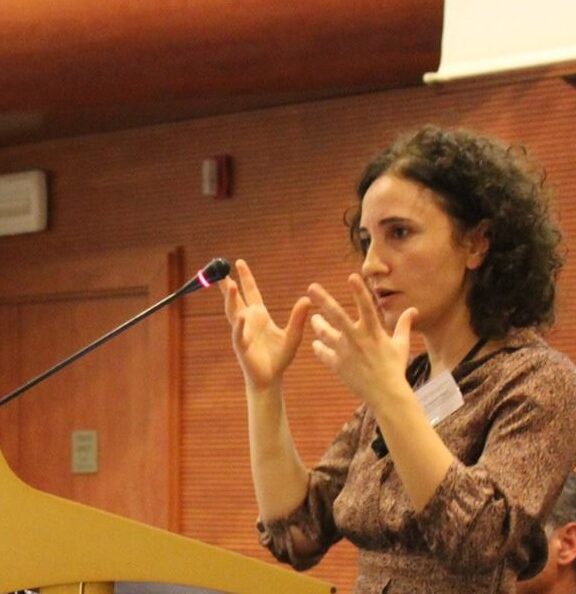
Marina Eleftheriadou is Assistant Professor of International Relations and Contemporary International Politics at the School of Political Sciences at Aristotle University of Thessaloniki. She has served as a Research Associate at the Robert Schuman Centre for Advanced Studies at the European University Institute (EUI) and as a Research Expert at the Centre for Religious Pluralism in the Middle East (CRPME), part of the Greek Ministry of Foreign Affairs’ initiative on religious pluralism in the Middle East. Her research focuses on the role of violent non-state actors in international politics.
- Turning Tides: Charting A New Path in Israel/Palestine | Middle East Bulletin 44
- US War on Iraq: 20 Years Later | Middle East Bulletin 43
- The Regional Great Game Revisited: Iran-Afghanistan-Pakistan | Middle East Bulletin 41
- CRPME Report on Religious Pluralism in the Middle East | No.6
- CRPME Special Report | No.5 | 2nd Athens International Conference on Religious and Cultural Pluralism & Peaceful Coexistence in the Middle East
- CRPME Report on Religious Pluralism in the Middle East | No.4
- CRPME Special Report | No.2 | Untying the Knots of Religious Diversity in Iraqi Kurdistan: Deploying Pluralism against Barbarism
- CRPME Report on Religious Pluralism in the Middle East | No.1
- The Christian Predicament in the Middle East | Middle East Bulletin 28
- The Displaced Elephant in the Room Refugees in the Middle East | Middle East Bulletin 27
- The Arab Spring: Crossroads | Middle East Bulletin 23
- Interview with Dr. Nabeel Shaath
- Salafi-Jihadism Vs Arab Spring; or how Osama Bin Laden might have saved “Jihad”
- Serving Security in the Middle East | Middle East Bulletin 22
- Another Perspective | Middle East Bulletin 21
- The Arab- Israeli conflict: Escape from Hope? | Middle East Bulletin 20
- US Troops Surge in Afghanistan: The not so “New Way Forward in Afghanistan”
- Indian Ocean A Diagram of Winds | Middle East Bulletin 19
- Syria: A Middle East Janus? | Middle East Bulletin 18
- Islam in Africa | Middle East Bulletin 17
- Pakistan: Red Alert | Middle East Bulletin 16
- Middle East Elections: Stability or Democracy? | Middle East Bulletin 15
- Iraq: Farewell to the Americans? Internal and Regional Implications | Middle East Bulletin 14
- The war in Gaza: Escalating to stalemate
- The Gulf, Shifting Alliances in quest for supremacy | Middle East Bulletin 13
- Brynjar Lia, Architect of Global Jihad, New York: Columbia University Press, 2008
- An Opportunity gap: Youth and Education in the Middle East | Middle East Bulletin 12
- Kids, Jihad and the Ballot box: Women in the Middle East | Middle East Bulletin 10
- The Muslim Brotherhood 80 years, 1928-2008 | Middle East Bulletin 9
- Shultz, Richard H., Dew, Andrea J., Insurgents,Terrorists and Militias, New York: Columbia University Press, 2006
- Media in the Middle East: Changing Realities | Middle East Bulletin 6
- The Rising Arab Regional Order | Middle East Bulletin 5
- China and India in the Middle East | Middle East Bulletin 4
- Middle East Bulletin 3
- Middle East Bulletin 2
- Middle East Bulletin 1
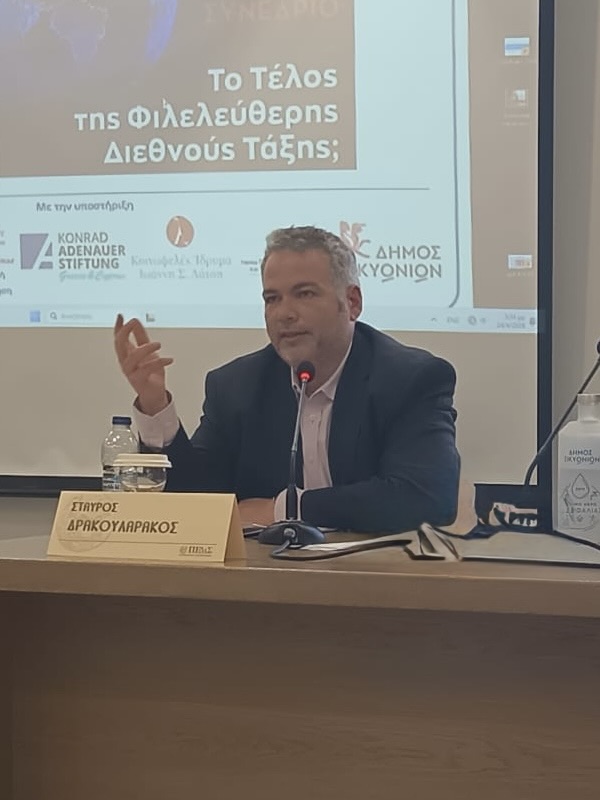
Stavros Drakoularakos (PhD Political Science and History, Panteion University of Athens) is Adjunct Lecturer at the University of Nicosia (Dep. Political Science and International Relations) and Academic Teaching Personnel at the University Neapolis Pafos (Dep. History, Politics and International Studies). He taught as Adjunct Lecturer at the University of Macedonia (Dep. of International and European Relations) and the University of the Peloponnese (Dep. of Political Science and International Relations), as well as Lecturer at the Hellenic National Defence College. He held the positions of Post-Doctoral Researcher at the University of the Peloponnese, Research Expert at the Centre for Religious Pluralism in the Middle East and Freelance Researcher at the European Council for Foreign Relations MENA Programme. His research focuses on Turkish-Israeli relations, Middle Eastern foreign policy and religious pluralism issues in the MENA and Mediterranean regions.
- Nine wars and one peace that changed the Middle East | Middle East Bulletin 48
- Annual Review of Greek Foreign Policy in the Middle East: 2025
- Turning Tides: Charting A New Path in Israel/Palestine | Middle East Bulletin 44
- US War on Iraq: 20 Years Later | Middle East Bulletin 43
- New Gulf Order? | Middle East Bulletin 42
- The Regional Great Game Revisited: Iran-Afghanistan-Pakistan | Middle East Bulletin 41
- Nikos Christofis (ed.), Erdoğan’s ‘New’ Turkey, Routledge, 2020
- Christianity in the Middle East (CME) | Report no.1
- The Arab uprisings: Break on through to the other side | Middle East Bulletin 39
- Iran, interrupted | Middle East Bulletin 38
- The domestic spillover in Iran following the Qasem Soleimani affair
- Turkey: 100 years of dilemma | Middle East Bulletin 37
- CRPME Report on Religious Pluralism in the Middle East | No.6
- CRPME Special Report | No.5 | 2nd Athens International Conference on Religious and Cultural Pluralism & Peaceful Coexistence in the Middle East
- CRPME Report on Religious Pluralism in the Middle East | No.4
- CRPME Report on Religious Pluralism in the Middle East | No.3
- CRPME Report on Religious Pluralism in the Middle East | No.1
- Religious Pluralism in the Middle East: the Canary in the Coal Mine | Middle East Bulletin 36
- Russia in the Middle East: The Russian Bear in Mind | Middle East Bulletin 35
- Interview with Rutu Modan, author of Exit Wounds and the Property
- USA in the Middle East: Just when I thought I was out, they pull me back in | Middle East Bulletin 34
- Egypt: There and back again | Middle East Bulletin 32
- Egypt and al-Azhar: love at first fight
- Notions of the Arab revolts | Middle East Bulletin 30
- Jihadism GPS | Middle East Bulletin 29
- The Christian Predicament in the Middle East | Middle East Bulletin 28
- Boko Haram or: how I learned to stop worrying and love the Islamic State
- The Displaced Elephant in the Room Refugees in the Middle East | Middle East Bulletin 27
- Between the Caliphate Soldiers, al-Qaeda, Libyan fighters and a hard place: the Maghreb
- What if…in Syria? | Middle East Bulletin 26
- Israel: Domestic Troubles
- Tunisia Today. How about Morocco or Algeria Tomorrow?

Zakia Aqra (Ph.D. in Political Science and International Relations at the University of the Peloponnese) serves as Editor-in-Chief at the Centre for Mediterranean, Middle East and Islamic Studies (CEMMIS). She is a lecturer of International Relations and Security at the Department of History, Politics and International Studies at Neapolis University Pafos. During 2024-2025, she taught at the Department of Languages and Intercultural Studies at the University of Thessaly. She was a Research Fellow in the Department of Political Science and International Relations at the University of the Peloponnese. She has conducted her post-doctoral research in “Diversity and Inclusivity in Security Studies”, a project funded by the European Union. She was a researcher in Christianity in the Middle East (CME), a project funded by the Hellenic Foundation for Research and Innovation between 2020 and 2023. She has been awarded with many scholarships, such as the Greek State Scholarships Foundation (IKY) for her PhD research (2018-2022) and Onassis Foundation (2014-2015) for her MSc in International Political Economy at Panteion University of Social and Political Sciences, Athens (2015). She has also obtained a second MSc in Middle East Politics at SOAS, London (2014). Her research interests focus on foreign policy, security and armed non-state actors. She has also worked as an intercultural mediator and interpreter, given her language skills and expertise on cultural, religious, social, and political issues in the Middle East.
- Turning Tides: Charting A New Path in Israel/Palestine | Middle East Bulletin 44
- US War on Iraq: 20 Years Later | Middle East Bulletin 43
- CME 2023 Special Report | Resilience in the Eye of the Storm: The Christian Communities in Lebanon
- Christianity in the Middle East (CME) | Report no.1
- The Arab uprisings: Break on through to the other side | Middle East Bulletin 39
- Iran, interrupted | Middle East Bulletin 38
- CRPME Report on Religious Pluralism in the Middle East | No.6
- CRPME Special Report | No.5 | 2nd Athens International Conference on Religious and Cultural Pluralism & Peaceful Coexistence in the Middle East
- CRPME Report on Religious Pluralism in the Middle East | No.4
- CRPME Special Report | No.2 | Untying the Knots of Religious Diversity in Iraqi Kurdistan: Deploying Pluralism against Barbarism
- CRPME Report on Religious Pluralism in the Middle East | No.1
- Notions of the Arab revolts | Middle East Bulletin 30
- Russo-Iranian Relations: A Friendship Found Between Tactic and Strategic Partnership
- The Christian Predicament in the Middle East | Middle East Bulletin 28
- Interview with the Ambassador of Palestine in Athens, Marwan Emile Toubassi
- The Displaced Elephant in the Room Refugees in the Middle East | Middle East Bulletin 27
- A perpetual identity crisis: ISIS through Arab eyes
- Geopolitics of Islam and Democracy | Middle East Bulletin 24
- Hezbollah and the Syrian crisis: balancing on a teeterboard
- All eyes on MENA: Economy and the Arab Spring
- The Arab Spring: Crossroads | Middle East Bulletin 23
- Serving Security in the Middle East | Middle East Bulletin 22
- Elias Khoury, Gate of the Sun, New York: Picador, 2007
- Interview with Elias Khoury
- Another Perspective | Middle East Bulletin 21
- The Arab- Israeli conflict: Escape from Hope? | Middle East Bulletin 20

He holds a BA in International and European Studies and an MA in International Relations and Strategic Studies from Panteion University, where he graduated top of his class and was awarded a State Scholarships Foundation (IKY) fellowship for doctoral research. He holds a PhD in International Relations, with a dissertation focusing on state formation, the pressures of the international system, and the formation of alliances.
He has worked with the Hellenic Ministry of Foreign Affairs, producing policy briefs, country-specific analyses, and policy proposals on developments in the Middle East, Africa, the Arab and Muslim world, and has also collaborated with the “Andreas Papandreou” Institute for Strategic and Development Studies. Moreover, he cooperated with the University of the Peloponnese as scientific coordinator of the project “Women & Terrorism.”
As Adjunct Lecturer at the University of the Peloponnese, he taught the course Geopolitical Competition in the Eastern Mediterranean. His research includes a postdoctoral project on religion and international relations in the Middle East, as well as participation in international conferences and peer-reviewed publications. He serves as a peer reviewer for international academic journals and as an external evaluator of research and educational projects supported by the European Union.
Publications
- Globalizing Middle East: Reversing the Irreversible
- Οι νέες συμμαχίες των ΗΠΑ: κάνοντας την ανάγκη επιλογή;
- The Obama Cairo address revisited
- From the Arab Legion to the Jordan Arab Army
- Tracing the trail of Fred Halliday
- Obama, Israel and the Palestinian Question
- Agitated waters: The West facing new actors in the Indian Ocean
- Out of the shadows, Syria leaps into the limelight
- The Arab world’s delving into Africa
- Obama’s Pakistani Policy: Friends in Need?
- Provincial elections in Iraq: Is centralization feasible?
- Leaving Iraq, living up to Saudi expectations
- Qatar: a neutral mediator?
- Unemployment and education in the Middle East
- A broken mirror: Israelis and Europeans
- Women and business in the Middle East
- What if the Muslim Brotherhood rose to power?
- The AKP & the Kurdish question: Implications for US-Turkey relations
- Islamic banking in Iran, Saudi Arabia and Pakistan
- The Sudan Agreement as a preamble to international cooperation
- Media and the State in the Arab World
- The Arab regional order at stake? The Saudi initiative and its effects
- NATO’s involvement in the Middle East
- China’s engagement with the GCC states: An “extramarital relationship” or a “future marriage proposal”?
- Developing ties between India and the Gulf: The role of Non Resident Indians
- The Middle East as a competition field between China and the US: A “consensus for disagreement
- A Chinese alliance strategy in the making
- Getting back home: The US as an offshore balancer
- Egypt: Nuclear Vassal or Regional Great Power?
- Beyond Lebanon: Syria’s regional standing
- NATO & Egypt: Partnership dilemmas
- The Kurdish piece of the Iranian puzzle
- Nine wars and one peace that changed the Middle East | Middle East Bulletin 48
- US War on Iraq: 20 Years Later | Middle East Bulletin 43
- New Gulf Order? | Middle East Bulletin 42
- The Regional Great Game Revisited: Iran-Afghanistan-Pakistan | Middle East Bulletin 41
- Crossing Borders in the Middle East | Middle East Bulletin 40
- Christianity in the Middle East (CME) | Report no.1
- The Arab uprisings: Break on through to the other side | Middle East Bulletin 39
- Iran, interrupted | Middle East Bulletin 38
- USA in the Middle East: Just when I thought I was out, they pull me back in | Middle East Bulletin 34
- Geopolitics of Islam and Democracy | Middle East Bulletin 24
- Serving Security in the Middle East | Middle East Bulletin 22
- Another Perspective | Middle East Bulletin 21
- The Arab- Israeli conflict: Escape from Hope? | Middle East Bulletin 20
- Indian Ocean A Diagram of Winds | Middle East Bulletin 19
- Syria: A Middle East Janus? | Middle East Bulletin 18
- Islam in Africa | Middle East Bulletin 17
- Pakistan: Red Alert | Middle East Bulletin 16
- Middle East Elections: Stability or Democracy? | Middle East Bulletin 15
- Iraq: Farewell to the Americans? Internal and Regional Implications | Middle East Bulletin 14
- The Gulf, Shifting Alliances in quest for supremacy | Middle East Bulletin 13
- An Opportunity gap: Youth and Education in the Middle East | Middle East Bulletin 12
- 60 years of Israel | Middle East Bulletin 11
- Kids, Jihad and the Ballot box: Women in the Middle East | Middle East Bulletin 10
- The Muslim Brotherhood 80 years, 1928-2008 | Middle East Bulletin 9
- Turkey and the Middle East | Middle East Bulletin 8
- Islamic Finance Take an interest at no Interest | Middle East Bulletin 7
- Media in the Middle East: Changing Realities | Middle East Bulletin 6
- The Rising Arab Regional Order | Middle East Bulletin 5
- China and India in the Middle East | Middle East Bulletin 4
- Middle East Bulletin 3
- Middle East Bulletin 2
- Middle East Bulletin 1

She concluded her undergraduate studies in the department of History and Archaeology of the University of Athens, with a major in History, and obtained her master’s degree (MA) in History: Near and Middle East in the School of Oriental and African Studies (SOAS), University of London with a distinction. She joined the Center of Mediterranean, Middle East and Islamic Studies (CEMMIS) in 2012, and is currently its coordinator. In addition, she was a research expert in the Center for Religious Pluralism in the Middle East (CRPME), from 2016 to 2018, and participated in the research project ’, from 2020 to 2023.
She speaks Greek, English, French and Arabic. She has collaborated with various NGOs in Greece and participated in international fora in Europe and the Middle East.
Publications
- Ottomanism and the creation of an Ottoman Nation
- The United Arab Emirates: Institutionalizing tolerance
- The Russian Patriarchate in the Middle East: Reclaiming an Old Prestige
- Muslims in America: Religion, Identity and Islamophobia?
- Can Lebanon Solve its Refugee Crisis?
- The Egyptian Military State
- Archaeology in Iraq: Between destruction, nationalism and imperialism
- Explaining the call for Dignity during the Arab Revolts
- Kurdish Nationalism in Iran since the Islamic Revolution
- The Evolution of PKK and the Kurdish Left in Turkey (1970s- 1980s)
- Southern Kurdistan: from autonomy to incorporation, 1918-1925
- The Salafi-Jihadi trend in Palestine
- Tunisia still in Turmoil
- Nine wars and one peace that changed the Middle East | Middle East Bulletin 48
- Politics Beyond Politics | Middle East Bulletin 47
- Algeria’s new foreign policy era
- Beyond the State: Non-State Actors in the Middle East | Middle East Bulletin 45
- Turning Tides: Charting A New Path in Israel/Palestine | Middle East Bulletin 44
- US War on Iraq: 20 Years Later | Middle East Bulletin 43
- New Gulf Order? | Middle East Bulletin 42
- The Regional Great Game Revisited: Iran-Afghanistan-Pakistan | Middle East Bulletin 41
- Crossing Borders in the Middle East | Middle East Bulletin 40
- Christianity in the Middle East (CME) | Report no.1
- The Arab uprisings: Break on through to the other side | Middle East Bulletin 39
- Iran, interrupted | Middle East Bulletin 38
- The new Sultan and Oman’s Regional and Domestic challenges
- Turkey: 100 years of dilemma | Middle East Bulletin 37
- CRPME Report on Religious Pluralism in the Middle East | No.6
- CRPME Special Report | No.5 | 2nd Athens International Conference on Religious and Cultural Pluralism & Peaceful Coexistence in the Middle East
- CRPME Report on Religious Pluralism in the Middle East | No.4
- CRPME Report on Religious Pluralism in the Middle East | No.3
- Religious Pluralism in the Middle East: the Canary in the Coal Mine | Middle East Bulletin 36
- Russia in the Middle East: The Russian Bear in Mind | Middle East Bulletin 35
- USA in the Middle East: Just when I thought I was out, they pull me back in | Middle East Bulletin 34
- Lebanon recontextualized | Middle East Bulletin 33
- Egypt: There and back again | Middle East Bulletin 32
- The Kurds and the new U.S. administration: Is Trump bringing a change?
- Iraq: live it or leave it | Middle East Bulletin 31
- The evolved, regional Hezbollah
- Notions of the Arab revolts | Middle East Bulletin 30
- Kurdish Report 3
- Kurdish Report 2
- Kurdish Report 1
- Aspects of Political Islam in the North Caucasus
- Jihadism GPS | Middle East Bulletin 29
- Nuclear Deal 101: Domestic and Regional Changes
- The new terms of Af-Pak relations
- Geopolitics of Islam and Democracy | Middle East Bulletin 24

Ihab Shabana holds a PhD from the Department of Political Science and International Relations at the University of the Peloponnese. His research interests focus on the European and Arab Left, political Islam, social movements and the labor movement in the Middle East, postcolonial studies, and intellectual history in the Arab-Muslim world. He has taught at the Hellenic Open University (HOU) and in the Master’s Program in “Mediterranean Studies” at the University of the Peloponnese.
Publications
- Irreconcilable foes? Religion, class and the state in Turkey
- A cultural tug-of-war: Internet culture and the Egyptian surveillance apparatus
- “Fuloulophobia” or the freedom of fear: Literature and Arab revolutions
- The Jihadist Imaginative A protracted dystopia?
- Political Islam and Christianity in the Middle East
- Mare Nostrum: Troubled Waters?
- What if Israel went on the offense again: Tel Aviv between alies and foes
- Συσσωμάτωση ή απαγκίστρωση: οι Παλαιστίνιοι μπροστά σε ιστορικές προκλήσεις
- Politics Beyond Politics | Middle East Bulletin 47
- Beyond the State: Non-State Actors in the Middle East | Middle East Bulletin 45
- Turning Tides: Charting A New Path in Israel/Palestine | Middle East Bulletin 44
- US War on Iraq: 20 Years Later | Middle East Bulletin 43
- Crossing Borders in the Middle East | Middle East Bulletin 40
- Iran, interrupted | Middle East Bulletin 38
- Turkey: 100 years of dilemma | Middle East Bulletin 37
- CRPME Report on Religious Pluralism in the Middle East | No.6
- CRPME Special Report | No.5 | 2nd Athens International Conference on Religious and Cultural Pluralism & Peaceful Coexistence in the Middle East
- CRPME Report on Religious Pluralism in the Middle East | No.4
- CRPME Report on Religious Pluralism in the Middle East | No.3
- Egypt: There and back again | Middle East Bulletin 32
- Beyond a more suitable “end of history”: Ibn Khaldun’s ideas and Islamic critical thinking
- Notions of the Arab revolts | Middle East Bulletin 30
- Interview with Heba Khalil
- The post 1967 intellectual debate in the Arab world
- Jihadism GPS | Middle East Bulletin 29
- The Christian Predicament in the Middle East | Middle East Bulletin 28
- The Displaced Elephant in the Room Refugees in the Middle East | Middle East Bulletin 27
- What if…in Syria? | Middle East Bulletin 26
- Salafism: A factor for democratization or destabilization?
- People on the margins: The Sinai in post-Morsi era
- The new Pew Report: The Postcolonial Piety
- The Left in Egypt’s political geography

Katia Zagoritou is a Ph.D. candidate at the University of Peloponnese in the Department of Political Science and International Relations (PSIR), in Greece, and a Research Associate at the Centre for Mediterranean, Middle East and Islamic Studies (CEMMIS). In 2019, she obtained her Master’s degree in Mediterranean Studies at the same department. Her research interests focus on the Kurdish question, Kurdish politics and history, social movements in the Middle East, with an emphasis on the Kurdish Movement(s) and the Kurdish women’s movement, political violence and new models of governance. She has published analysis articles regarding these issues in English and Greek, and has contributed to edited volumes. She has presented parts of her ongoing PhD research at international conferences (UK, USA, Kurdistan Region of Iraq). Besides Greek, she speaks English, French, Italian, and studies Kurmanji and Arabic.
Publications
- Kurds in Turkey: unending struggle amid repression and shrinking political space
- Yazidis: attempts to recover and struggle to survive in post-ISIS era
- Russia’s Return into North Africa is Cemented Upon Arms, Energy and Grain
- Beyond Non-State Actors: The States in the Middle East | Middle East Bulletin 46
- Turning Tides: Charting A New Path in Israel/Palestine | Middle East Bulletin 44
- US War on Iraq: 20 Years Later | Middle East Bulletin 43
- New Gulf Order? | Middle East Bulletin 42
- The Regional Great Game Revisited: Iran-Afghanistan-Pakistan | Middle East Bulletin 41
- Iraqi elections: Sadrist electoral “victory over pro-Iranian militias” amid a legitimacy crisis and a fragile socio-economic environment
- Crossing Borders in the Middle East | Middle East Bulletin 40
- The Arab uprisings: Break on through to the other side | Middle East Bulletin 39
- Iran, interrupted | Middle East Bulletin 38
- Turkey: 100 years of dilemma | Middle East Bulletin 37
- Quagmire and fragile alliances in Northern Syria: from Kurdish-held Rojava to the Idlib rebels’ bastion
- Religious Pluralism in the Middle East: the Canary in the Coal Mine | Middle East Bulletin 36
- Algerian protests against the pouvoir: Cracks in the “deep state”?
- Towards a new page in Baghdad-Erbil relations in post-referendum era?
- Russia in the Middle East: The Russian Bear in Mind | Middle East Bulletin 35

Ιlias Mitrousis graduated from the Department of International and European Studies at the University of Piraeus in 2018, and in 2020 he received a Master of Arts (MA) in “Mediterranean Studies” from the University of Peloponnese. Since 2025, he has been a PhD Candidate at the Department of Political Science and International Relations of the same University, where he works on his dissertation on the resilience and survival of authoritarian regimes in the Middle East, with a focus on Jordan and Syria. Since November 2018, he has been a research associate at the Centre for Mediterranean, Middle East and Islamic Studies (CEMMIS), contributing regularly with articles and analyses on political and social developments in the Middle East and North Africa. He speaks Greek, English, and French.
Publications
- The Turkish “Diaspora”: An Old Story’s Belated Recognition?
- Kakais’ evolving dilemma; Survival through tested secrecy or claiming more in the open?
- Eyeing the Peninsula: A Review of Moscow’s Diplomatic Toolkit in the Arab Gulf
- Nine wars and one peace that changed the Middle East | Middle East Bulletin 48
- Greece’s Stance vis-à-vis the War in Iran: How Close Is Too Close?
- Annual Review of Greek Foreign Policy in the Middle East: 2025
- Politics Beyond Politics | Middle East Bulletin 47
- Beyond Non-State Actors: The States in the Middle East | Middle East Bulletin 46
- Beyond the State: Non-State Actors in the Middle East | Middle East Bulletin 45
- The Gaza War’s impact on Jordan: Navigating domestic protests, elections, and strategic alliances
- US Foreign Policy on the Gaza War: Objectives and Implications
- Turning Tides: Charting A New Path in Israel/Palestine | Middle East Bulletin 44
- US War on Iraq: 20 Years Later | Middle East Bulletin 43
- New Gulf Order? | Middle East Bulletin 42
- Middle Eastern reactions to the war in Ukraine: strategic selfishness or a prelude to evolving multipolarism?
- The Regional Great Game Revisited: Iran-Afghanistan-Pakistan | Middle East Bulletin 41
- The Lebanese “Groundhog Day” of overlapping crises: Does it ever end?
- Crossing Borders in the Middle East | Middle East Bulletin 40
- The Arab uprisings: Break on through to the other side | Middle East Bulletin 39
- Syria’s fragile balances and the looming threat of a new vicious circle of instability
- As Israel normalizes relations with the Arabsphere, can the Palestinians revive the Palestinian Question?
- Iran, interrupted | Middle East Bulletin 38
- Syria’s never-ending war(s); or why the end of the civil war does not mean peace
- Turkey: 100 years of dilemma | Middle East Bulletin 37
- Religious Pluralism in the Middle East: the Canary in the Coal Mine | Middle East Bulletin 36
- Sudan Calling: A belated Arab Spring or a continuing process?
- New Government – Persistent Challenges: Fragile Balances in post-elections Lebanon
- Russia in the Middle East: The Russian Bear in Mind | Middle East Bulletin 35
- The Palestinian question and the Trump presidency: current developments

She completed her internship at IIR in 2006, when she joined CEMMIS as a researcher until 2010. She holds a degree in International, European and Regional Studies from Panteion University (2007) and a MA in International Relations in the Middle East from Durham University (2008). From 2011 to 2014 she taught in the undergraduate course “Introduction to International Politics”, in the Department of Geography, Politics and Sociology at the University of Newcastle. Since 2014, she has been an Associate Fellow of the Higher Education Academy of England. In 2019 she obtained her PhD in Critical Theory of International Relations and Cybersecurity at the University of Newcastle, with a studentship in Cities, Critical Infrastructures and Political Violence. Her PhD examines the role of popular culture and symbols in the construction of cyberwarfare and cyberterrorism as national security issues in the US. She rejoined CEMMIS in 2024.
Email forwarding: chryssa.toufexi@cemmis.edu.gr
Publications
- Behind concrete walls in the slums of hope and despair
- International maritime security: Opportunities and challenges in the Indian Ocean
- Syria in the Middle East: A damascene spring for Arab diplomacy.
- Somalia’s multiple spoilers of war: What role for political Islam?
- Pakistan’s pan-Islamist adventures in the Middle East: tales of yesterday?
- Book Review, Journey into Islam: the crisis of globalization, Akbar Ahmed, Washington DC: Brookings Institution Press, 2007
- Afghanistan’s next President: In search of an authoritative figure
- What state for Iraq? The centralization-decentralization struggle
- Turkey and the Arab Gulf: Is Turkey looking eastwards?
- Coverage of the Lebanese Crisis. Middle Eastern Media inside and outside Lebanon.
- The Mekka Accords in the emerging Arab system
- Syrian Dilemmas in Quest of Middle East Hegemony
- China and the Arab- Israeli Conflict: Walking on a tightrope
- Book Review. Ian S Lustick “Trapped in the War on Terror” Philadelphia: University of Pennsylvania Press, September 2006
- Israel’s Holocaust and the Politics of Nationhood, Cambridge: CUSP, 2005
- Egypt: A return to regional prominence or a spiral into decline?
- Yazidis in Iraq and Syria: A decade of displacement and insecurity
- Beyond Non-State Actors: The States in the Middle East | Middle East Bulletin 46
- The GERD dispute and the geopolitics of the Nile basin
- Beyond the State: Non-State Actors in the Middle East | Middle East Bulletin 45
- Iranian elections: Opportunities and challenges for Pezeshkian’s government
- Another Perspective | Middle East Bulletin 21
- Indian Ocean A Diagram of Winds | Middle East Bulletin 19
- Syria: A Middle East Janus? | Middle East Bulletin 18
- Pakistan: Red Alert | Middle East Bulletin 16
- Akbar Ahmed, Journey into Islam: the crisis of globalization, Washington DC: Brookings Institution Press, 2007
- Middle East Elections: Stability or Democracy? | Middle East Bulletin 15
- Iraq: Farewell to the Americans? Internal and Regional Implications | Middle East Bulletin 14
- The Gulf, Shifting Alliances in quest for supremacy | Middle East Bulletin 13
- Media in the Middle East: Changing Realities | Middle East Bulletin 6
- The Rising Arab Regional Order | Middle East Bulletin 5
- China and India in the Middle East | Middle East Bulletin 4
- Middle East Bulletin 3
- Ian S. Lustick, Trapped in the War on Terror, Philadelphia: University of Pennsylvania Press, September 2006
- Middle East Bulletin 1
- Idith Zertal, Israel’s Holocaust and the Politics of Nationhood, Cambridge: CUSP, 2005

A humanitarian worker and researcher with an interdisciplinary academic background spanning international relations, law, Islamic studies, and public health. Holds a BA in International and European Studies from the University of Piraeus, an MA in Islamic Studies from the Universidad de Granada, and an MA in International Humanitarian Law & Human Rights from the Democritus University of Thrace and is currently pursuing an MSc in Public Health and Health Policy at Aristotle University of Thessaloniki. Professional experience covers many years in the humanitarian sector, working with leading UN and EU agencies as well as Médecins Sans Frontières (MSF), in contexts such as Lebanon, Greece, Cyprus, Serbia, and Spain, with a focus on displaced populations from the Middle East. Skilled in combining field-based and desk-based research, with a deep understanding of complex humanitarian contexts, programmatic realities, and policy environments. Experienced in data collection, analysis, and translating evidence into operational and strategic insights, with a particular interest in forced migration, people on the move, humanitarian affairs, public health, and access to healthcare. Has participated in various research projects with the Euro-Arab Foundation for Higher Studies in Spain, is a member of CEMMIS since October 2019, and speaks English, Spanish, and Arabic.
Publications
- Turning Tides: Charting A New Path in Israel/Palestine | Middle East Bulletin 44
- US War on Iraq: 20 Years Later | Middle East Bulletin 43
- The Regional Great Game Revisited: Iran-Afghanistan-Pakistan | Middle East Bulletin 41
- Crossing Borders in the Middle East | Middle East Bulletin 40
- Another brick in the war: Afghanistan’s education system and its instrumentalization by the Taliban
- The Arab uprisings: Break on through to the other side | Middle East Bulletin 39
- Iran, interrupted | Middle East Bulletin 38
- Israel’s Electoral Quarantine is over: Unity Government and Netanyahu’s political prowess
- Turkey: 100 years of dilemma | Middle East Bulletin 37
- Transcending sectarianism and pursuing change: an “Iraqi Autumn”?

Eleni–Panagiota (Elda) Stoupa is a Scientific Associate at the MSc program “Global Health – Disaster Medicine” of the School of Medicine, National and Kapodistrian University of Athens, and a Research Associate at the Centre of Mediterranean, Middle East and Islamic Studies within the Department of Political Science and International Relations, University of the Peloponnese.
She holds a BSc in Political Science and Public Administration from the National and Kapodistrian University of Athens, with a specialization in Political Analysis, and an MSc in Social Anthropology from the University of Edinburgh. She has worked as a Project Manager and coordinator on multiple EU- and internationally funded projects and has participated as a Researcher in several public health projects focusing on vulnerable populations.
Publications
- 440 pair of shoes: Feminicide in the Turkish borders
- Holy Lands of faith, blood and conflicts
- The Russian-Speaking Community in Israel
- Beyond the State: Non-State Actors in the Middle East | Middle East Bulletin 45
- Turning Tides: Charting A New Path in Israel/Palestine | Middle East Bulletin 44
- New Gulf Order? | Middle East Bulletin 42
- The Regional Great Game Revisited: Iran-Afghanistan-Pakistan | Middle East Bulletin 41
- Crossing Borders in the Middle East | Middle East Bulletin 40
- The Dom in the Middle East: an ethnic group of wandering
- The Arab uprisings: Break on through to the other side | Middle East Bulletin 39
- Iran, interrupted | Middle East Bulletin 38
- Turkey: 100 years of dilemma | Middle East Bulletin 37
- Religious Pluralism in the Middle East: the Canary in the Coal Mine | Middle East Bulletin 36
- Music in the Arab world: performing tarab
- Ζār: spirit possession or ritual healing?
- Russia in the Middle East: The Russian Bear in Mind | Middle East Bulletin 35
- Sufism: an experiential tradition

Eirini Giannopoulou is a PhD Candidate of International Affairs at the New School for Social Research in New York (USA). She graduated from the Department of Political Science and Public Administration of the University of Athens, majoring in International and European Studies, in 2021. In 2023, she completed her first MA (with Honours) in International Governance and Politics at the same department. She finished the MSc Violence, Conflict and Development at the School of Oriental and African Studies of the University of London (SOAS) in 2025. Her research interest is centered around private capital flows in conflict resolution, within the liberal peacebuilding agenda and the security-development nexus. She has carried out Internships at the Embassy of Cyprus in Athens, at the Embassy of Greece in Brussels and at the Permanent Mission of Cyprus to the United Nations in New York. She speaks Greek, English and French and is learning Spanish and Russian. She is a member of the CEMMIS research team since 2021.
Publications
- The Gulf states and the Israeli-Palestinian conflict: Balancing New Challenges
- How private interests shaped the War in Iraq: The role of Private Military Companies
- UAE: Human rights violations, dual foreign policy and the domestic power play
- Dividing the fragmented: Taliban governance, opium and IS-KP in Afghanistan
- Nine wars and one peace that changed the Middle East | Middle East Bulletin 48
- Annual Review of Greek Foreign Policy in the Middle East: 2025
- Beyond Non-State Actors: The States in the Middle East | Middle East Bulletin 46
- Beyond the State: Non-State Actors in the Middle East | Middle East Bulletin 45
- Populism, authoritarian tactics and xenophobia: Tracking developments in Tunisian politics
- Turning Tides: Charting A New Path in Israel/Palestine | Middle East Bulletin 44
- US War on Iraq: 20 Years Later | Middle East Bulletin 43
- New Gulf Order? | Middle East Bulletin 42
- Is Tunisia transforming from a democratization case study to an autocracy?
- Egypt’s regional role and the securitization of popular demand
- The Regional Great Game Revisited: Iran-Afghanistan-Pakistan | Middle East Bulletin 41

Artemis Papadaki is a graduate of the Department of Theatre Studies at the National and Kapodistrian University of Athens (2021). In 2024, she completed her Master’s degree in Media, Communication and Culture at Panteion University of Social and Political Sciences. Her thesis focused on the war in Gaza and its representations on social media. Her research interests lie at the intersection of new media, culture and society in the MENA region. She has been studying Modern Standard Arabic (MSA) for the past three years, and in the summer of 2025, she completed the “Colloquial Arabic 1” program at Birzeit University in Palestine. She has professional experience in the cultural sector in Greece, collaborating with festivals and institutions such as the Athens and Epidaurus Festival, the Petit Paris d’Athènes Festival, Fabrica Festival, and Analogue Festival. She speaks Greek, English, and French (B2 level), and is currently learning Arabic and German. She joined the Centre for Mediterranean, Middle East and Islamic Studies (CEMMIS) in October 2021.
Publications
- The “information warfare” over the War on Gaza
- The Narrative of the Iraq War through Visual Culture
- The role of media in the GCC: the case of Al Jazeera
- Cinema, Theatre and Music in Afghanistan under the new Taliban regime
- Politics Beyond Politics | Middle East Bulletin 47
- Turning Tides: Charting A New Path in Israel/Palestine | Middle East Bulletin 44
- US War on Iraq: 20 Years Later | Middle East Bulletin 43
- New Gulf Order? | Middle East Bulletin 42
- Iranian cinema after the Green Movement
- The international book fairs in the Arab world: a story of censorship
- The Regional Great Game Revisited: Iran-Afghanistan-Pakistan | Middle East Bulletin 41
- The music scene in Tunisia and Egypt after the Arab Spring

Panagiota Bouka graduated from the Department of Political Science and International Relations at the University of the Peloponnese and completed her postgraduate studies in the Middle Eastern Studies program at Leiden University. She is also a research fellow at the Institute of International Relations, in the Department of Russia, Eurasia, and Southeast Europe, and since 2019 she has been writing articles on international and European issues. Her research interests focus on the defense of human rights, and for the past three years she has been a member of the Athens Pride organizing team. She speaks English, German, and Spanish, is familiar with Greek Sign Language, and is learning Arabic.
Publications
- Nine wars and one peace that changed the Middle East | Middle East Bulletin 48
- Politics Beyond Politics | Middle East Bulletin 47
- Beyond Non-State Actors: The States in the Middle East | Middle East Bulletin 46
- Beyond the State: Non-State Actors in the Middle East | Middle East Bulletin 45
- Jordan and the Gaza war

She graduated from the department of International, European and Area Studies at Panteion University (2024) and is currently pursuing a Master’s degree in Digital Media, Communication and Journalism at Aristotle University of Thessaloniki. Between 2019 and 2024, she taught Greek language courses to migrants as a volunteer. Since 2023, she has been contributing articles to journals and online media, focusing on international and European affairs, as well as developments in the Middle East. Her research interests include international political communication, international relations, and the geopolitical dynamics of the Middle East.
Publications
- Nine wars and one peace that changed the Middle East | Middle East Bulletin 48
- Politics Beyond Politics | Middle East Bulletin 47
- Beyond Non-State Actors: The States in the Middle East | Middle East Bulletin 46
- China’s Policy in the Middle East
- Beyond the State: Non-State Actors in the Middle East | Middle East Bulletin 45

Alexandra Nikopoulou holds a PhD in Political Science and International Relations from the University of the Peloponnese. She earned a Bachelor’s degree in International and European Studies from the University of Piraeus and a Master’s degree in Mediterranean Studies from the University of the Peloponnese.
Since 2017, she has been affiliated with the Center for Mediterranean, Middle Eastern and Islamic Studies (CEMMIS), where she now serves as Editor-in-Chief. At the same time, she is a project manager and researcher in the China Program of the Institute of International Relations (IIR) at Panteion University. She has also worked as an editor at the international think tank Sana’a Center for Strategic Studies.
Her research focuses on proxy wars, non-state actors, and regional power, with an emphasis on the Arabian Peninsula, particularly Iran, Saudi Arabia, and Yemen.
Publications
- Turkey: The state of 5 ½ coups
- Bahaism: A peaceful religion under persecution
- The Final Square Off in Post-War Syria: The Triangle Relationship of Russia, Iran and Israel
- U.S. and the Gulf States: Unconventional Alliance or Forbidden Relationship?
- Saudi Arabia and Iran’s Regional Struggle for Power: Another Source of Instability for Lebanon
- Annual Review of Greek Foreign Policy in the Middle East: 2025
- Beyond Non-State Actors: The States in the Middle East | Middle East Bulletin 46
- Beyond the State: Non-State Actors in the Middle East | Middle East Bulletin 45
- Turning Tides: Charting A New Path in Israel/Palestine | Middle East Bulletin 44
- US War on Iraq: 20 Years Later | Middle East Bulletin 43
- New Gulf Order? | Middle East Bulletin 42
- Syria 2022: a powder keg on the verge of explosion or back to business as usual?
- The Regional Great Game Revisited: Iran-Afghanistan-Pakistan | Middle East Bulletin 41
- Crossing Borders in the Middle East | Middle East Bulletin 40
- The Arab uprisings: Break on through to the other side | Middle East Bulletin 39
- The Yemeni civil war: a year since the Riyadh Agreement
- Iran, interrupted | Middle East Bulletin 38
- Turkey: 100 years of dilemma | Middle East Bulletin 37
- Religious Pluralism in the Middle East: the Canary in the Coal Mine | Middle East Bulletin 36
- Qatar: 1.5 year after the blockade. A PR win or the rise of yet another arch enemy for Saudi Arabia and its allies?
- Russia in the Middle East: The Russian Bear in Mind | Middle East Bulletin 35
- USA in the Middle East: Just when I thought I was out, they pull me back in | Middle East Bulletin 34
- Saudi Arabia: the Gulf’s resurgent power on the verge of a new era
- Lebanon recontextualized | Middle East Bulletin 33
