

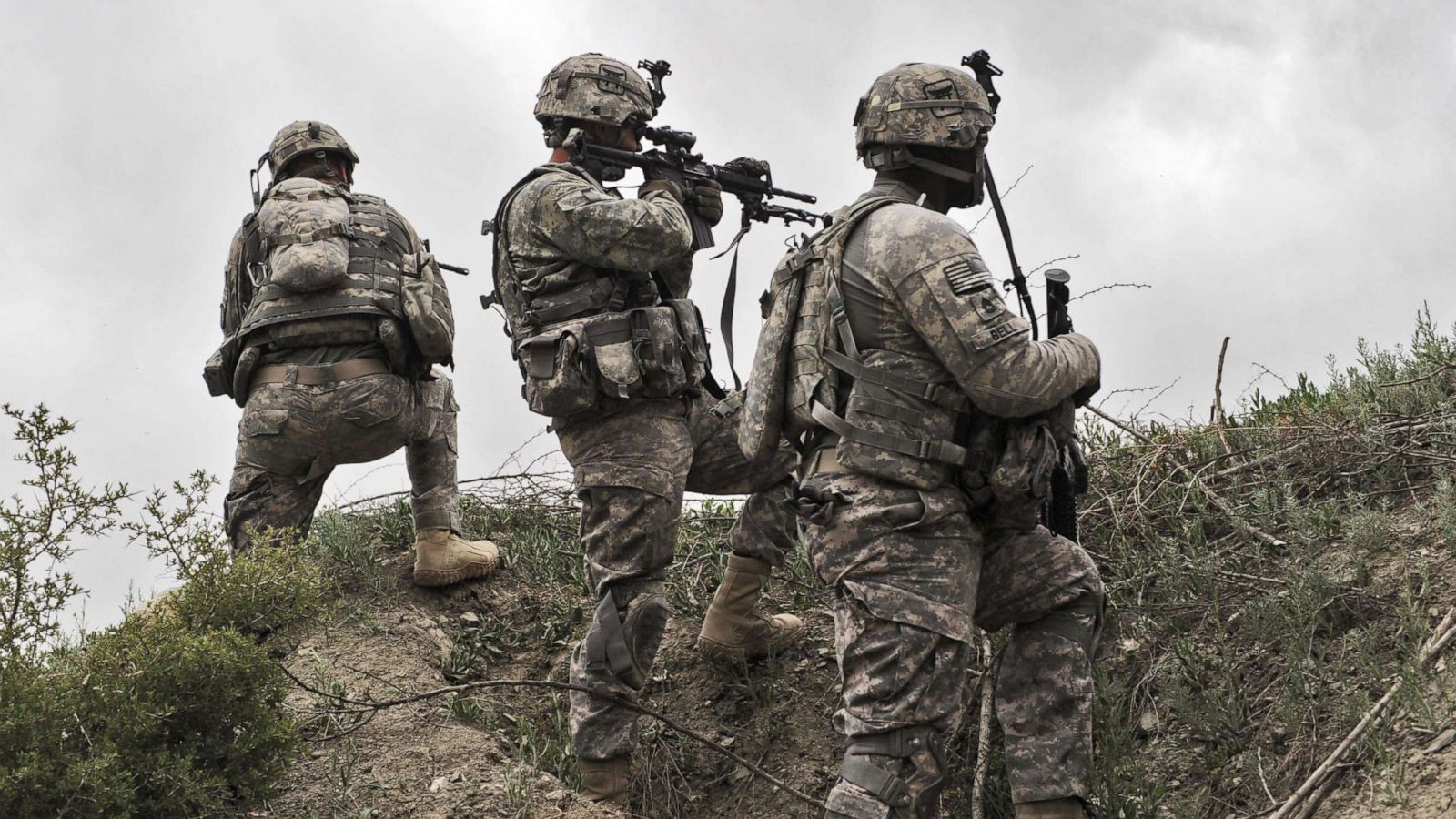
The long-awaited new strategy on Afghanistan seems to be an ill-fated reproduction of the strategy employed in Iraq. Not only does it take for granted that the Iraqi case is successful in the long run, but it also fails to grasp the fundamental differences between the two cases. Most importantly, although it notes the interconnection between Afghanistan and Pakistan, it fails to address the latter properly. Consequently, even a limited-aims strategy of defeating al-Qaeda and entering a political compromise with the Taliban seems unattainable.
Precisely one year ago, when the Middle East was at the center of yet another bloody conflict in Gaza, the world had its eyes and hopes set on the upcoming US President Barack Obama. As the months passed the high expectations for a spirited fresh start in American foreign policy, particularly in the wider Middle East region, deflated. Obamas approach to the Arab-Israeli conflict, Syria, and Iran was relatively new when compared to Bush-era policies but there was no apparent break with the past and no breakthrough in sight. However, to be fair, Obamas pre-election interviews and inauguration speech, in the context of the war on terror or the struggle against violent extremism (as the new politically correct terminology requires), placed the highest importance on Afghanistan and Pakistan. Thus, if a bold initiative was to be expected it had to come from that corner of the world.
On December 1 , Obama announced the new way forward in Afghanistan and Pakistan.1 The strategy, as outlined by Obamas speech and later clarified by military and diplomatic officials, unfolds on two separate but interlocked fronts: Afghanistan and Pakistan. On the Afghan front it consists of a military and a civilian component that will, according to the plan, reverse the Talibans momentum, increase the number and the capabilities of the Afghan security forces, extend the Afghan governments reach in remote regions and improve governance where the governmental services are already present. The key to these tasks is a 30,000 troop surge and an unspecified parallel increase of the civilian personnel. These forces under a strategy of shape, clear, hold and build are supposed to secure populated areas, remove insurgents and keep them insurgency-free so that reconstruction and development projects can safeguard their long-term immunity from Taliban influence. The endgame of this strategy is the transition of responsibility to the Afghan security forces while the US and NATO gradually withdraw, starting from July 2011 . However, the actual pace of the withdrawal will be determined by the conditions on the ground. On the Pakistani front no specific measures are introduced except from the vague concept of an effective partnership with Pakistan. This can mean nothing more than leaving the work to the Pakistani authorities under subtle pressure and economic and military help while the US army covertly expands its drone attacks program.
After several months of evaluations of the situation and deliberations on the best possible strategy, Obama came out with a speech. The only bold thing about his speech was its rhetoric soundness; but we already know Obamas rhetoric adeptness. The core of the presented strategy is a replica of the clear, hold and build strategy of the surge in Iraq two years ago (based on the most recent US counterinsurgency doctrine) 2 disregarding the fact that its long-term effectiveness is not yet clear. Even the troop surge is barely news as military personnel has already been doubled since January 2009, before any new strategy had been formulated; (during 2009 37,000 new troops have reinforced the existing 31 ,000 troops that were stationed in Afghanistan when Bush left office 3).
It is more likely that the 10-month period was used by Obama to camouflage his decision to escalate the war in Afghanistan so that it would look compatible with his pre-election pledges to reduce military power in favor of diplomacy and to bring overseas adventures to an end. The delay in announcing the new strategy allowed Obama to authorize the dispatch of another 37,000 troops which, in small parts, quietly and lacking any extravagant speeches to announce their arrival landed in Afghanistan. In other words, the 30,000 surge is in fact a 67,000 troops surge. In economic terms the $30 billion dollars that the surge is expected to cost will bring the estimated cost of the Afghanistan war to around $95 billion dollars for the next year (the 2010 defense budget allocates around $68 billion dollars of the $130 billion dollars appropriated for the overseas operations4). However, those $30 billion dollars are not officially part of the 2010 budget. This way Obama can claim that the defense budget for the Iraq and Afghanistan wars is significantly lower compared to the previous years (the lowest since 2006). The defense budget for the two wars was $141 .7 billion dollars in 2009, $178.9 billion dollars in 2008, $163.9 billion dollars in 2007.5
Nevertheless, there is one basic element in the presented strategy which makes it worth examining. It is not only that the means are amplified, but also that the ends have shrunk. Indeed the sole innovative element in the new strategy is the limited goals it sets. There is no reference to the much-propagated liberation of the Afghans from medieval dark forces and practices in order to bring them on the path of modernity, prosperity and democracy. As Obama suggested the nation that I am most interested in building is our own. Accordingly, the United States strategic goal in Afghanistan is to disrupt, dismantle, and defeat al-Qaeda in Afghanistan and Pakistan, and to prevent its capacity to threaten America and our allies in the future. At the same time it is only the Talibans momentum that has to be reversed. In fact the US will give the green light to the Afghan government to open the door to those Taliban who abandon violence and respect the human rights of their fellow citizens.
The US are looking for a way out of Afghanistan but they want this done gracefully and there is no better way other than re-defining the reasons for their stay in the first place. If the Taliban are not part of the problem anymore they can become part of the solution. But first they have to be driven into a corner so that they disassociate themselves from al-Qaeda elements. Then they can be dragged into negotiations from a position of relative weakness. In fact, there is no need to moderate the Taliban. Provided that the Taliban agree to respect and not overrun the Karzai government (or any other transitional government that comes out of the negotiations) until the foreign troops completely pull out the US will have the necessary facade of stability to head to the exit door. Under these circumstances the US will probably raise no objections to negotiations with even the most unrepentant Taliban, especially if the negotiations are held between the Afghan government and the Taliban with no American participation; in this case the US will simply respect the will of the Afghan people. In November Richard Holbrooke, in an interview with Spiegel, identified disassociation with al-Qaeda as the only term for the Taliban to be accepted as political interlocutors.6 The idea is not new; it has been in the air for some time. Indeed, there have already been moves towards this direction. In October 2008 there was a lot of speculation around the alleged decision of the US government to remove the name of Mullah Omar from the terror list as a preliminary step for the offset of talks. 7 In April 2009 the story of another similar effort to open dialogue with the Afghan insurgency was leaked to the press. According to reports, Richard Holbrooke had opened an indirect negotiations channel with Gulbuddin Hekmatyar, the leader of the Hez-i-Islami. This is an initiative that sets a precedent for similar moves in the near future towards the Taliban. 8
However, the Afghan strategy, no matter how plausible it may seem, is doomed to fail unless there is some other, more pro-active strategy for Pakistan besides the announced one which is discrete in order to avoid unnecessary unease and protest in Pakistan. There is no way to attest the actual nature of the relations between the Taliban and al-Qaeda. The latter can be asked to keep a low profile until the former reestablish themselves in Afghanistan in the post-negotiations period and until the foreign troops leave the country. In the meantime they can stay in Pakistan with no real threat to their survival. After the Taliban take a firm grip on Afghanistan again, al- Qaeda can reemerge. Given the poor state of the Afghan Security Forces, their demise is almost certain and probably swift. Obamas plan to bring the Afghan armys (ANA) strength from 97,000 9 to 240,000 10 and the Afghan Polices (ANP) force from 94,000 11 to 160,000 12 by 2013 will most probably result in a badly integrated, non-motivated, unprofessional security force where quantity will be emphasized over quality.
In any case, it is highly improbable that the US would risk a new invasion; nothing more than a few air strikes are to be expected as an American response. Recently many American policy- makers have been eager to discern an apparent rift between al-Qaeda and the Taliban, though with little concrete evidence, in order to smooth the way into accepting the Taliban even if the latter do not publicly rid themselves from al-Qaeda. In the following months this trend could actually intensify. As US officials will realize that bringing Taliban to the negotiations table under US-professed terms is not an easy task, they will probably be tempted to step up the withdrawal with no real success on the ground. The supposed rift between the two will be presented as a rationale. There will be no reason to prolong the war as the goals will already be achieved.
According to UN estimates around 15% to 20% percent of the country is lost to the Taliban every year. 13 At the end of 2008 164 districts out of 364 were under Taliban control. 14 In 2009, although there were over 60,000 US troops and 71 ,000 ISAF troops (of whom only 15% are military engaged, 67% have peripheral roles and the remaining 28% have no military role) 15, the Taliban managed to have a significant presence (ranging from total control to exerting influence) in south and south-west Afghanistan. At the same time regions that were considered secured (east Afghanistan) or since 2001 havent witnessed insurgent activity (north Afghanistan, particularly Kunduz province) have become the center of organized attacks. Insurgent attacks peaked in August 2009 reaching an average of approximately 100 attacks per day. In 2009 US fatalities doubled in comparison to the previous year (155 in 2008 and 309 in 2009) representing a third of total fatalities since the start of the war. Great Britain, in 2009 only, lost half of its fallen soldiers since 2001 .16 As Admiral Mike Mullen, chairman of the US Joint Chiefs of Staff acknowledged, the violence in 2009 escalated by 60% compared to last year, while the Taliban insurgency has gotten better and more sophisticated. 17
It is highly doubtful that 30,000 more US troops along with an additional 5,000 NATO (even in the unlikely case that all those NATO forces are combat troops) can reverse the situation without trying to adjust the overrated Iraqi surge to Afghanistans strategic environment. Afghanistans population is slightly smaller than Iraqs. However, while the 28.9 million Iraqis live in 437 sq km of relatively flat and easily accessible land, Afghanistans 28.4 million people are dispersed across 652 sq km of rough mountainous terrain with bad or nonexistent transportation infrastructure. Moreover, contrary to the highly urbanized Iraq (67% of the total population), Afghanistans urban population is one of the smallest in the world (24% of the total population). Accordingly, while in Iraq most of the insurgent activity was located around large cities (predominantly Baghdad) or geographically defined areas (Anbar Province), in Afghanistan there are several population centers, detached from each other, across almost the whole of the country where the insurgency is active.
Under this light, besides the obvious difficulties in logistics, it seems practically impossible to secure these areas with fewer forces than those employed for clearing, holding and building Baghdad only. The available troops can only sweep some target areas and temporarily hold them until they move to other places, leaving the already cleared areas to the highly unreliable Afghan powers. Furthermore, in the Afghan case, it is not a question of reforming existing institutions and services but building them from scratch amidst rampant corruption, contraband and warlordism. If there are no troops stationed in the cleared areas to maintain stability the building phase will be constantly disrupted. According to some accounts 70% of provincial governors spend the night in Kabul instead of their provinces. 18
At the same time there are no genuine participants for an Awakening Movement. The latter were groups formed in Anbar Province (and later in other provinces too) consisting of local Sunni tribes members who, under an agreement between the tribal leaders, the Iraqi government and the US, hunted down insurgents (mostly al-Qaeda operatives) in the province. The Awakening Councils contribution to the (temporary) freeze of insurgent activity and improvement of security in Iraq was pivotal. In Afghanistan, a similar initiative is difficult to occur. On the one hand, Karzais clinging to power is translated into a centralization of governance (no matter how ineffective it is to the point that Karzai is called the Mayor of Kabul) and much pressure will have to be used in order to persuade him to allow serious arming of local leaders, more so since they could use this military advantage against him in a future power struggle. On the other hand local leaders and warlords, many of whom are involved in illegal business (mostly opium production and trafficking), are unreliable and might end up playing a double game especially if they feel that their lucrative business is in danger. Thus it is not certain that, even if these groups are formed, they will have a positive effect except if it is done the Italian way. 19
Most importantly, those new troops can by no means effectively patrol along the 2,640 km Afghan-Pakistani border and thus they would not be in a position to prevent the dislocated Taliban from regrouping and returning to recapture the lost territory. If the issue of the sanctuary in Pakistan is not properly addressed, al-Qaedas survival will not be inexorably bound to the developments in Afghanistan and the Taliban will not face an overwhelming challenge to their insurgency. Even in the case that the US are planning to expand drone attacks, no effective disruption of the sanctuary will be achieved unless ground forces are involved to finish up the work; air power alone can rarely not to say neverbring tangible results. US military operations except for occasional, short term, hot pursuit missions, would seriously harm the political standing of any Pakistani government. So the ball is back again into Pakistans hands and that is why, without a serious Pakistani strategy, there is little to expect on the Afghan front.
In fact it is quite probable that in upcoming months the Taliban, especially with the commencement of the fighting season, will move northwards expanding their influence beyond Kunduz province which, in the previous year, was the heart of several attacks against German forces who control the province. Taliban activity in north Afghanistan might create frictions inside the Coalition given that most of the countries that want to avoid combat situations are stationed there and if Taliban reach their areas they will have to engage in fighting or leave the country. It will also endanger the new supply route (Northern Distribution Network), which is designed as an alternative to the Pakistan route (Khyber Pass) that has repeatedly come under attack. The Northern Distribution Network involves few different routes that connect Baltic Sea and Caspian Sea ports to Afghanistan through Russia, Caucasus and Central Asia. Finally, a new front in the north could lead to the destabilization of Central Asian states, especially Tajikistan and Uzbekistan. There have already been reports that Islamic Movement of Uzbekistan (IMU) fighters have been seen in north Afghanistan (Kunduz Province) which during the early 90s was used as an operational base for its war against the Uzbek regime. After the IMUs re-activation in the area, Uzbekistan and other Central Asian states could in the long run turn into a FATA-like sanctuary alternative to Pakistan. Consequently, there are few indications that the Taliban can be so seriously weakened that they would rush to negotiations. A winning insurgency, or an insurgency that believes it has significant chances to win, has no reason to negotiate. In any case, in light of the recent events that brought Yemen under the spotlight of the war against violent extremism, the Af-Pak front might become just one of the problems that the Obama Administration will face. 1 February 2010
Notes
- For the full text of the speech see http://www.whitehouse.gov/the-press-office/remarks-president-address- nation-way-forward-afghanistan-and-pakistan ↩
- FM 3-24, pp. 5-18 5-23 http://www.fas.org/irp/doddir/army/fm3-24.pdf ↩
- For the US troops levels as of January 2009 see: Senate Armed Services Committee, Challenges Facing the Defense Department, January 27, 2009, p.2 http://armed-services.senate.gov/Transcripts/2009/01%20January/ A%20Full%20Committee/09-02%20-%201-27-09.pdf For the troops levels as of December 2009 see http://news.bbc.co.uk/2/hi/8387065.stm ↩
- Amy Belasco, The Cost of Afghanistan, Iraq and Other Global War on Terror Operations Since 9/11. Congressional Research Services, p 13 http://www.fas.org/sgp/crs/natsec/RL33110.pdf ↩
- Ibid, p. 13 ↩
- http://www.spiegel.de/international/world/0,1518,662787,00.html ↩
- See for example http://www.presstv.ir/detail.aspx?id=73563§ionid=351020403 ↩
- Shahzad, Syed Saleem, Holbrooke Reaches Out to Hekmatyar, April 10, 2009, http://www.atimes.com/atimes/ Middle_East/KD10Ak04.html ↩
- http://www.isaf.nato.int/images/stories/File/Dec_2009-Fact_Sheet_ANA.pdf ↩
- Rashid, Ahmed, The Afghanistan Impasse, The New York Review of Books, Vol. 56, No. 15, October, 8, 2009 http://www.nybooks.com/articles/23113 ↩
- http://www.isaf.nato.int/images/stories/File/Dec%202009-Fact%20Sheet%20ANP2.pdf ↩
- Rashid, Ahmed, The Afghanistan Impasse, The New York Review of Books, Vol. 56, No. 15, October, 8, 2009 http://www.nybooks.com/articles/23113 ↩
- Cordesman, Anthony H., Shape, Clear, Hold, and Build: The Uncertain Metrics of the Afghan War, CSIS, December 3, 2009, p. 36, http://csis.org/files/publication/091201_afghan_metrics_0.pdf ↩
- Rashid, Ahmed, The Afghanistan Impasse, The New York Review of Books, Vol. 56, No. 15, October, 8, 2009 http://www.nybooks.com/articles/23113 ↩
- Cordesman, Anthony H., Shape, Clear, Hold, and Build: The Uncertain Metrics of the Afghan War, CSIS, December 3, 2009, p. 62, http://csis.org/files/publication/091201_afghan_metrics_0.pdf ↩
- http://www.icasualties.org/OEF/index.aspx ↩
- http://www1.voanews.com/english/news/US-Military-Afghan-Surge-Begins-Next-Week-79003537.html ↩
- Quoted by David Kilcullen http://bellum.stanfordreview.org/?p=1464 ↩
- A major scandal broke out when it was revealed that the Italian secret services had Taliban and local warlords on payroll to keep the Surubi district near Kabul -under Italian jurisdiction- safe from attacks. Ignorant of the deal, the French soldiers that replaced the Italians considered the district calm and thus were surprised to come under attack suffering many losses. McGregor, Andrew, French Operation in Afghanistan Aims to Open New Coalition Supply Route, Terrorism Monitor, Vol. 7, Iss. 36, Jamestown Foundation, http://www.jamestown.org/single/?no_cache=1&tx_ttnews%5Btt_news%5D=35773 ↩


