


 Κατά την τελευταία δεκαετία, τα εμπόδια για την ανατροπή του καθεστώτος Άσαντ στη Συρία διαμορφώθηκαν κυρίως από την εξωτερική παρέμβαση δύο βασικών παραγόντων: της Ρωσίας και της Χεζμπολάχ. Η Μόσχα παρείχε κρίσιμη αεροπορική υποστήριξη στην κυβέρνηση της Συρίας, ενώ η Χεζμπολάχ, με την υποστήριξη του Ιράν, πρόσφερε χερσαίες δυνάμεις που βοήθησαν στη διατήρηση της εξουσίας του Άσαντ. Από την άλλη πλευρά, το Ισραήλ και τα κράτη του Κόλπου, όπως η Σαουδική Αραβία, είχαν τις δικές τους επιφυλάξεις σχετικά με το ποιος ή τι θα μπορούσε να διαδεχθεί τον Άσαντ. Για το Ισραήλ, το ενδεχόμενο να αναλάβει τη Συρία η Μουσουλμανική Αδελφότητα, με την υποστήριξη της Τουρκίας, ήταν πιο ανησυχητικό από τη συνέχιση της διακυβέρνησης του Άσαντ. Σε αυτό το πλαίσιο, η προτίμηση του Ισραήλ ήταν «ο διάβολος που γνωρίζουν» —ο Άσαντ— παρά ένα αβέβαιο μέλλον με τη Μουσουλμανική Αδελφότητα.

 This article tracks domestic and foreign policy developments in Tunisia during the past three years, on the occasion of the latest election results, with Saied being reelected with 90% of the vote. A series of undemocratic discrepancies, a continuum of socioeconomic precarity and growing xenophobic practices are leading to the characterization of Tunisia as a state steadily moving towards authoritarianism.

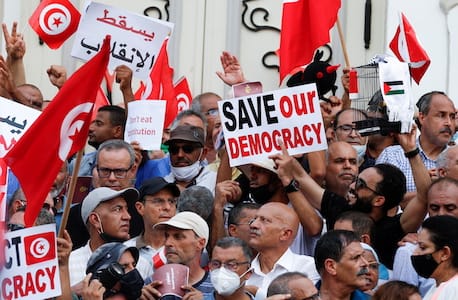 Tunisia is usually being referred to as one of the most successful cases with regards to social justice and democratization after the Arab Spring uprisings. However, ten years later, the country is once more facing a political and socioeconomic crisis, with President Saied’s policies becoming more and more unpopular amongst the people. Amidst the recent wave of popular upheaval in Tunisia, this article aims to analyze current domestic affairs and examine whether authoritarianism is on the rise.

 Music in Tunisia and Egypt flourished during the Arab Spring and became the voice of the uprisings. Often made and performed by protesters on the streets, it kept spirits high. After the elections of 2011, in both Tunisia and Egypt, alternative, rock, rap and electro music kept growing, challenging the system and demanding justice. Today, these genres and their creators continue to talk about themes such as women's rights, failed domestic politics and bleak memories.


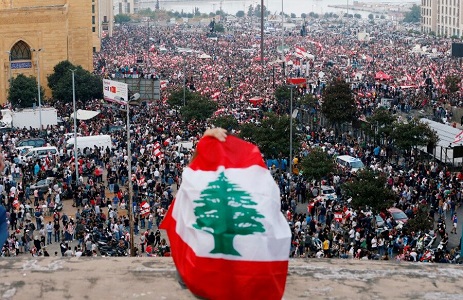 The economic recession, the dysfunctional political system and the refugee crisis have made Lebanon a vulnerable player in the Middle East region. The economic reforms that the former Prime Minister of Lebanon, Saad Hariri, tried to introduce, caused a massive cross-sectarian wave of demonstrations which lead Lebanon to political instability and to the Prime Minister’s resignation. Moreover, Hezbollah’s reaction and the developments in Syria make the situation in Lebanon even more complicated. Rapid developments in Lebanon are leading to a significant alteration in Lebanon’s political system which are affecting the citizens’ lives.
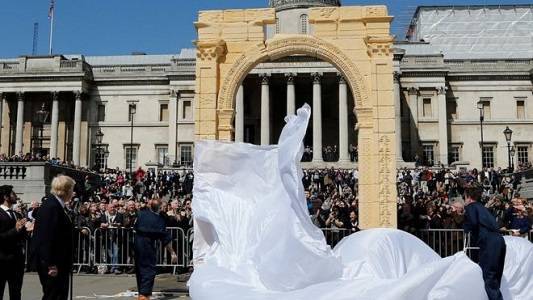 Since the beginning of the war in Syria in 2011, the country’s cultural heritage has been subjected to different kinds of annihilation. With the conflict nearing some kind of end but external forces still destabilizing the region, ongoing plans for the reconstruction of Syria’s archaeological casualties generate a multifaceted debate over when they should be taking place, the motivating factors behind these projects, their purpose and who are the stakeholders coordinating their implementation. Τhe reconstruction of post-conflict archaeology in Syria could be providing a valuable opportunity for sustaining communities through participatory initiatives that appropriate the traces of war.

 Protests across Sudan are well into their fourth month, consistently defying President Omar al-Bashir’s suppressive response, as well as his superficial political appeasing efforts. That persistence, stemming from economic and political demands highly similar to those expressed in several Arab countries during the so-called “Arab Spring”, interestingly underscores a relevant continuity of the transformative dynamics that emerged back in 2011. In Sudan, similar peaceful revolts have twice -in 1964 and 1985- ended up in the collapse of military dictatorships. Nevertheless, despite the protesters’ determination, the existence of a particularly rigid pro-status quo regional political landscape further complicates the equation that could lead to actual political change.

Follow this link for our book review of Dmitri Trenin, What is Russia Up To in the Middle East? (Polity Press, 2018).
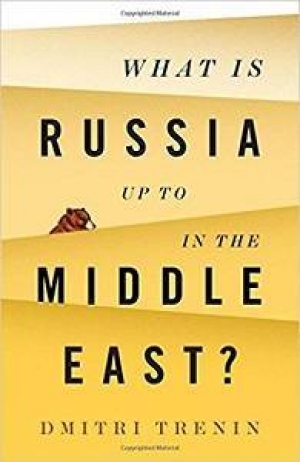
Dmitri Trenin’s book is a welcome contribution to a thin body of print on Russian politics in the MENA region. Rather than enunciating in detail Putin’s regional policies -by definition an impossible task in 140 small pages- Trenin offers a succinct summation of these policies, their short-term impact and their perceptions by the region’s states. Well-versed in Russia’s geopolitical Weltanschauung, Trenin is aware of the country’s perennial interests in the greater Middle East. Far from a newcomer to the region, Russia has after all had a ‘rich history of involvement’. Yet continuities are often punctured by ruptures: the demise of the Soviet Union and the rejection of its mediating initiatives in the First Gulf War meant that the Middle East ‘almost vanished’ from Russian foreign policy. Moscow’s restoration of ties with Israel in the fall of 1991 and its co-chairing of the Arab-Israeli peace conference in Madrid the same year looked more like spasmodic attempts at survival of a flittering giant.


The Centre for Mediterranean, Middle East & Islamic Studies posts a multitude of positions in the context of free academic debate. These do not necessarily reflect the positions of the CEMMIS. The use and reproduction of the multimedia material displayed in the CEMMIS website has non-profit character and serves academic and educational purposes, with full respect to copyright and intellectual property laws, and in accordance with the Greek Laws 2121/1993 and 2557/1997.

